Primary School
A primary school small enough to know every child by name, and rich enough to let them discover what they love.
A primary school small enough to know every child by name, and rich enough to let them discover what they love.
The first seven years of school shape everything that follows.
At Stromlo Forest Anglican College, our Pre-Kindergarten to Year 6 program begins with a simple belief: children thrive when they are known, valued and know that they matter. Grounded in strong relationships and a deep sense of belonging, our approach brings together rigorous, evidence-informed teaching with curiosity, creativity and wonder. We want every child to develop the knowledge and skills to become a confident reader, writer and mathematician, while also learning to think deeply, ask powerful questions, act with love and courage, and see themselves as capable learners who can make a meaningful contribution to the world around them.
Strong foundations, taught explicitly and taught well
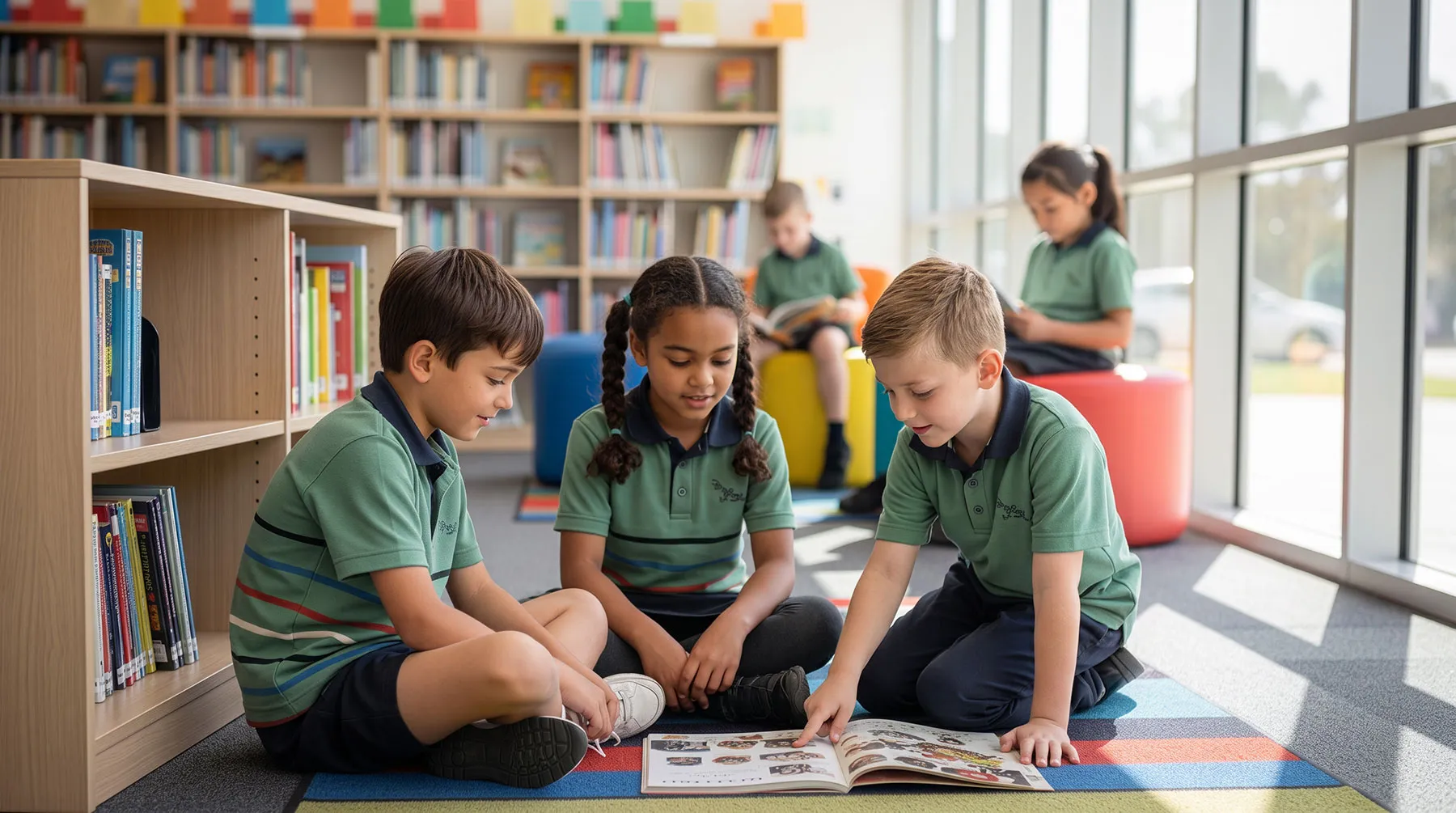
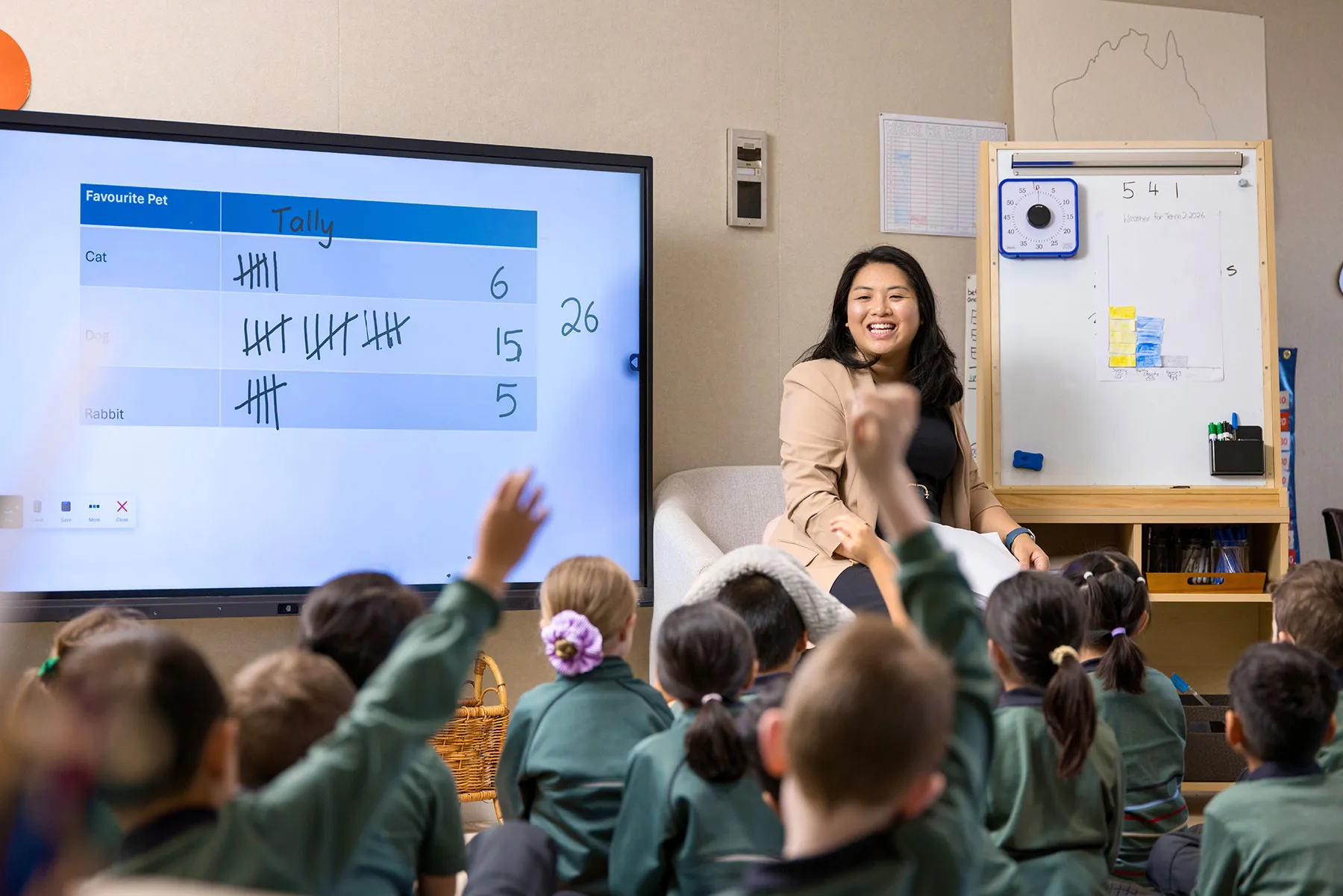
Each day in our Primary School provides time for children to build the strong foundations that enable them to flourish as learners. Dedicated literacy and numeracy learning each morning combines explicit, evidence-informed teaching with opportunities to think, inquire, practise and apply. These strong foundations sit within a rich and connected curriculum encompassing Science and Technology, Humanities and Social Sciences, Philosophy, Health and Physical Education, and the Arts. Specialist learning in Music, Physical Education, Languages and Visual Art, together with regular experiences in our Library, further enriches children's learning. Through concept-based inquiry, children make connections across disciplines, encounter significant ideas and questions, and use their growing knowledge and skills in purposeful and authentic ways.
We believe breadth matters. The Primary years are a time for children to discover not only what they can do, but who they might become. A child may discover that they are a scientist, an artist, a musician, a mathematician, a writer, an athlete, a designer or a storyteller — often several of these at once. Our role is to open those possibilities: to nurture curiosity, recognise strengths, encourage courage and create the conditions in which every child can experience the joy of discovering that their ideas, talents and contributions matter.
Known, valued and connected
At Stromlo Forest Anglican College, decisions begin with the child. We seek to know each child deeply — their strengths and interests, their friendships and challenges, what brings them joy and what helps them thrive. Every child belongs to a class community led by a teacher who knows them well and advocates for their learning, wellbeing and growth. This relationship sits at the heart of our partnership with families, built through trust, openness and regular communication so that home and school can work together in the best interests of each child.
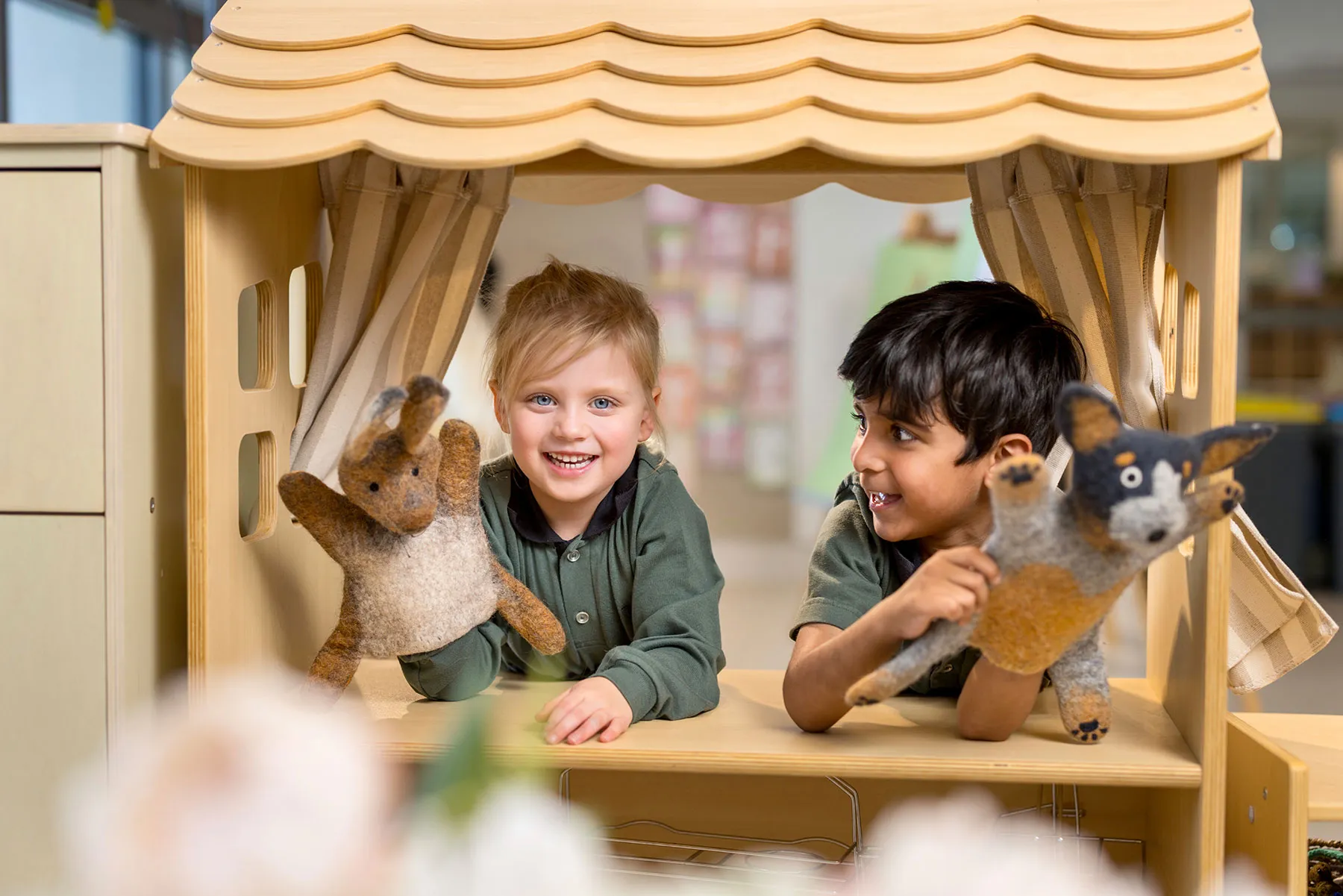
Our culture is grounded in respect: seeing each other with care, listening deeply and acting with kindness. We recognise children as capable people whose ideas, experiences and perspectives deserve to be heard. Social and emotional learning is intentionally woven throughout the Primary years, helping children develop self-awareness, empathy, resilience and the skills to navigate relationships with confidence and care. Play also remains an important part of childhood, creating space for imagination, friendship, movement, joy and the social learning that happens when children explore their world together.
Belonging extends beyond the classroom. Children also belong to multi-age House communities, where friendships grow across year levels and opportunities for leadership, mentoring, participation and service emerge naturally. Together, these experiences help children understand that belonging is more than simply being part of a community, it is knowing that you are seen, heard, valued and that your presence matters.
At Stromlo Forest Anglican College, we believe responsive teaching begins with knowing the learner well. Teachers use observation, conversation and purposeful assessment to understand where children are in their learning, recognise what they are ready for next, and make thoughtful decisions about the teaching, challenge and support each child needs to thrive.
Our approach is guided by a Multi-Tiered System of Supports (MTSS), providing a coherent framework for responding to the academic, social, emotional and behavioural needs of children. High-quality, evidence-informed classroom teaching forms the foundation for every learner, with increasingly targeted and individualised support provided when needed. Our Diverse Learning Team works collaboratively with classroom teachers, children, families and, where appropriate, external professionals to identify strengths, understand barriers to learning and develop responsive pathways forward.
Challenge is equally important. When children demonstrate readiness to extend their learning, teachers intentionally provide greater depth, complexity and opportunity for sophisticated thinking within the learning program. Extension is not simply more work; it is learning that invites children to make connections, grapple with ideas, pursue questions and apply their knowledge in increasingly complex ways.
Across the curriculum, our approach is informed by the principles of Universal Design for Learning (UDL). Rather than expecting every child to access, engage with and demonstrate learning in the same way, we intentionally design learning with diversity in mind. Multiple means of engagement, representation, and action and expression create greater opportunities for children to access learning, experience appropriate challenge and demonstrate what they know and can do.
Ultimately, diverse learning is not a separate program or place. It reflects our commitment to making child-centred decisions, removing unnecessary barriers and creating the conditions in which every learner can experience growth, challenge, belonging and success.
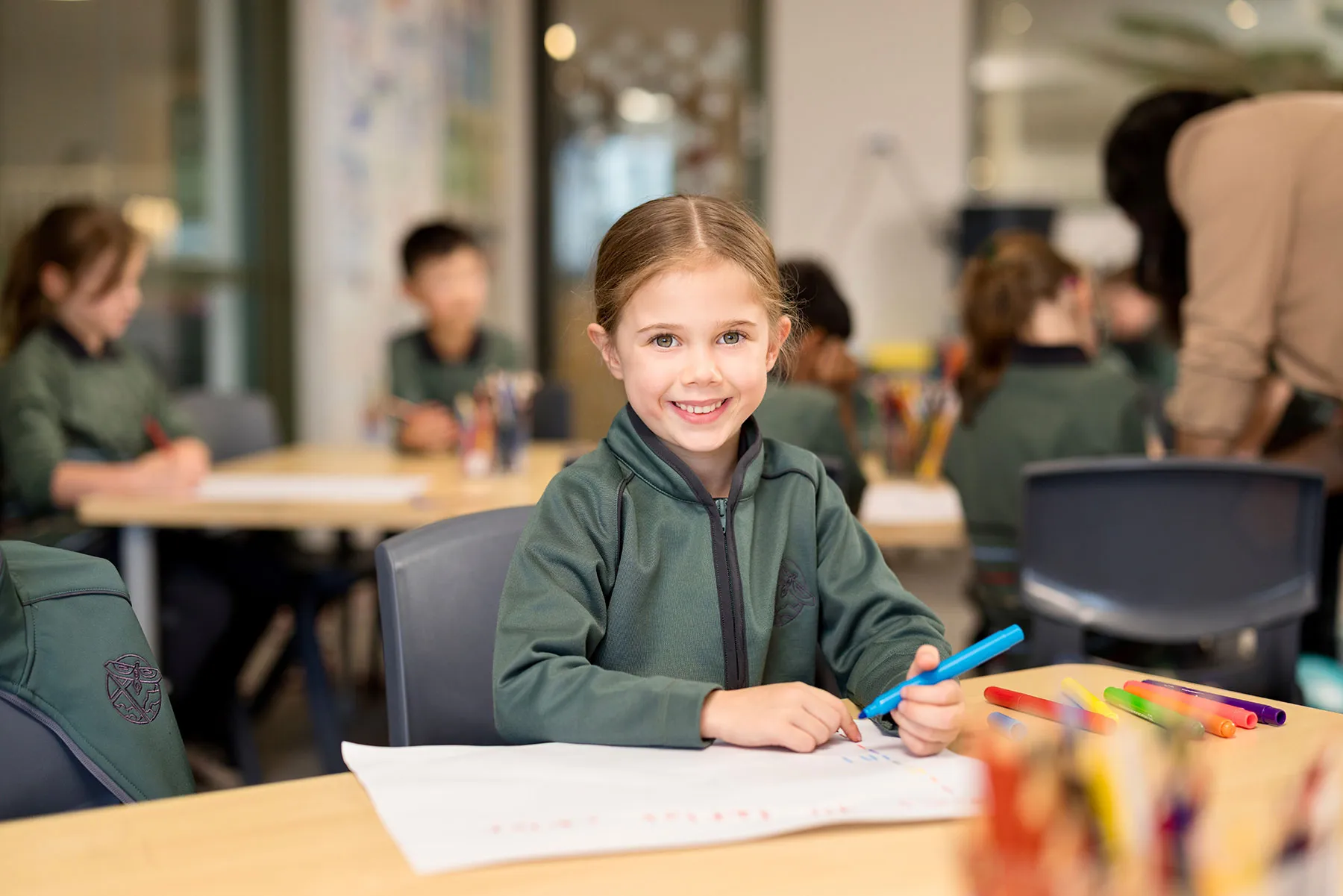
In the Primary years, children engage with digital technologies purposefully and in ways that support curiosity, creativity, collaboration and deep thinking. Digital tools are one of many resources available to learners, alongside books, conversation, writing, drawing, making, experimenting and time spent learning with and from one another.
Devices should be used intentionally, collaboratively and for meaningful learning. Students may research, create, code, compose, design and communicate using digital tools, while avoiding screen use that is passive or centred on gamified learning. Our approach is designed to ensure that technology remains a thoughtful means to learning, rather than becoming the focus of learning itself.
Digital citizenship is taught explicitly from the earliest years because navigating the digital world requires wisdom as well as skill. Children develop an age-appropriate understanding of consent, privacy, cyber security, respectful online relationships, digital identity and the responsible use of emerging technologies, including artificial intelligence. As these technologies continue to shape the world our children will inherit, we want them to become discerning, ethical and confident digital citizens who understand not only how technology works, but when and why it should be used.
We also recognise that families are navigating many of the same questions at home. Through practical guidance and ongoing partnership, we seek to support parents in developing healthy, respectful and balanced approaches to technology at home, so that children experience consistent messages about safety, responsibility and wellbeing across both home and school.
Learning at Stromlo Forest Anglican College extends well beyond the classroom.
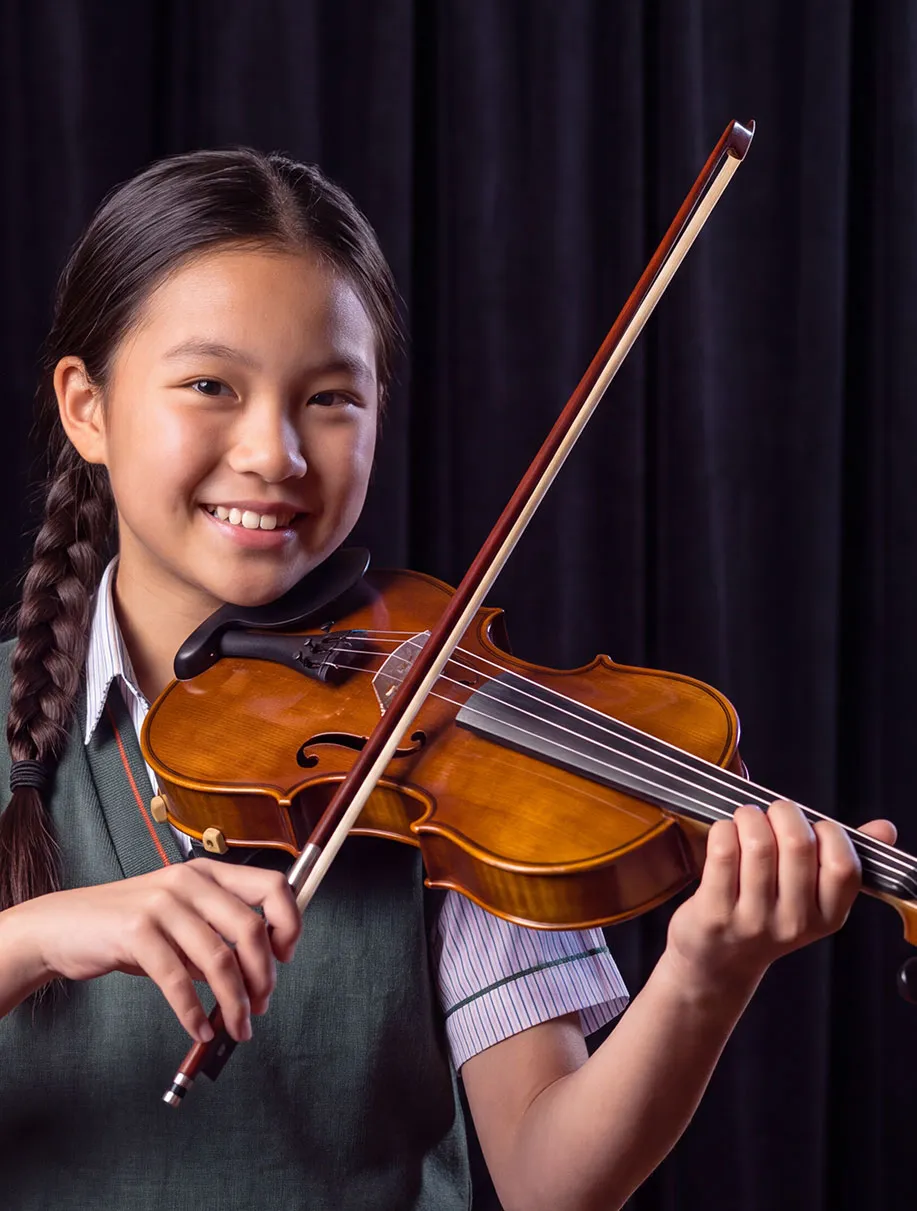
Our co-curricular program creates opportunities for children to discover new interests, develop emerging strengths and experience the joy of participating alongside others. Through music, performance, sport, creativity, movement and a growing range of clubs and interest groups, children are encouraged to have a go, pursue what fascinates them and perhaps discover something they did not yet know about themselves.
Our co-curricular offerings are intentionally responsive. As our College grows, clubs and experiences continue to evolve in response to the interests, ideas and passions of our children. Excursions, incursions and authentic experiences further enrich learning across every year level, connecting classroom ideas with people, places and experiences beyond the school gates. Camps in the Primar School provide opportunities for increasing independence, connection, challenge and shared experience.
Our relationship with place is also an important part of learning at Stromlo Forest. From the earliest years, children are supported to learn about Country, developing knowledge of the land, stories, histories, cultures and continuing connections of First Nations peoples. And to learn on Country, experiencing place directly, noticing carefully and developing a deeper sense of connection, respect and responsibility. Over time, these experiences help children understand that Country is not simply somewhere we learn, but something we can learn with and from.
As children move through the Primary years, they are given increasing opportunities to contribute, take responsibility and exercise leadership. In Year 6, leadership becomes an important part of their final Primary year, with students encouraged to identify how their strengths, interests and ideas can contribute to the life of the College and the wider community. Rather than leadership being defined by a title or a particular role, we want children to understand it as service, initiative, courage and the capacity to make a positive difference for others.

It's a fair question, and we'd rather answer it directly than sidestep it. We don't yet have a decade of results to point to. What we do have is an experienced leadership team, teachers recruited specifically for this work, and the backing of the Anglican Diocese of Canberra and Goulburn, which has been running schools in this region for generations. We also have something established schools can't offer: the ability to build every practice deliberately, rather than inherit it.
While our first Years 7 and 8 cohorts may be smaller than they will eventually be, they are still large enough to cater for a proper school experience.
In 2027, almost nobody will know anyone. This is probably the easiest year to arrive. Every student joins a mentor class and a House Group from day one, and our transition program is built around the assumption that friendships need to be actively made rather than left to chance.
Our year-long subjects (English, Mathematics, Science, Philosophy, Languages and Physical Education) run for every student, every year. The specialist subjects run on a semester rotation, so students experience the full breadth across Years 7 and 8 rather than choosing between them. It's a structure that works well and gives students a genuine basis for later subject choices.
Both are planned for. Academic Support and Enrichment lessons are timetabled every week for every student, so support and extension happen inside the school day rather than as an afterthought. Teachers use this time for targeted literacy and numeracy work, personalised support, and enrichment for students ready to push further.
No. Every secondary student has a personal device and uses our learning management system, Canvas, because those are genuinely useful tools. But technology is used where it improves learning and set aside where it doesn't. A great deal of what is planned at Stromlo is discussion, practical investigation, outdoor learning, reading and making. We teach digital citizenship explicitly, and we take healthy technology habits seriously.
No. We welcome families of all faiths and none. Students take part in Religious and Values Education and regular Chapel, which are about exploring meaning, ethics and character rather than requiring belief.
Sport, music ensembles and instrumental tuition, drama and dance, and clubs including the Culinary Garden Lab, Chess Club, Debating and Public Speaking Society, STEM and Innovation Club, Book Club and Arts Studio. New clubs will start when students express interest. In a new school like Stromlo, a student with an idea and a teacher willing to supervise is genuinely all it takes.